 ROUND 1 AUTONOMY90/100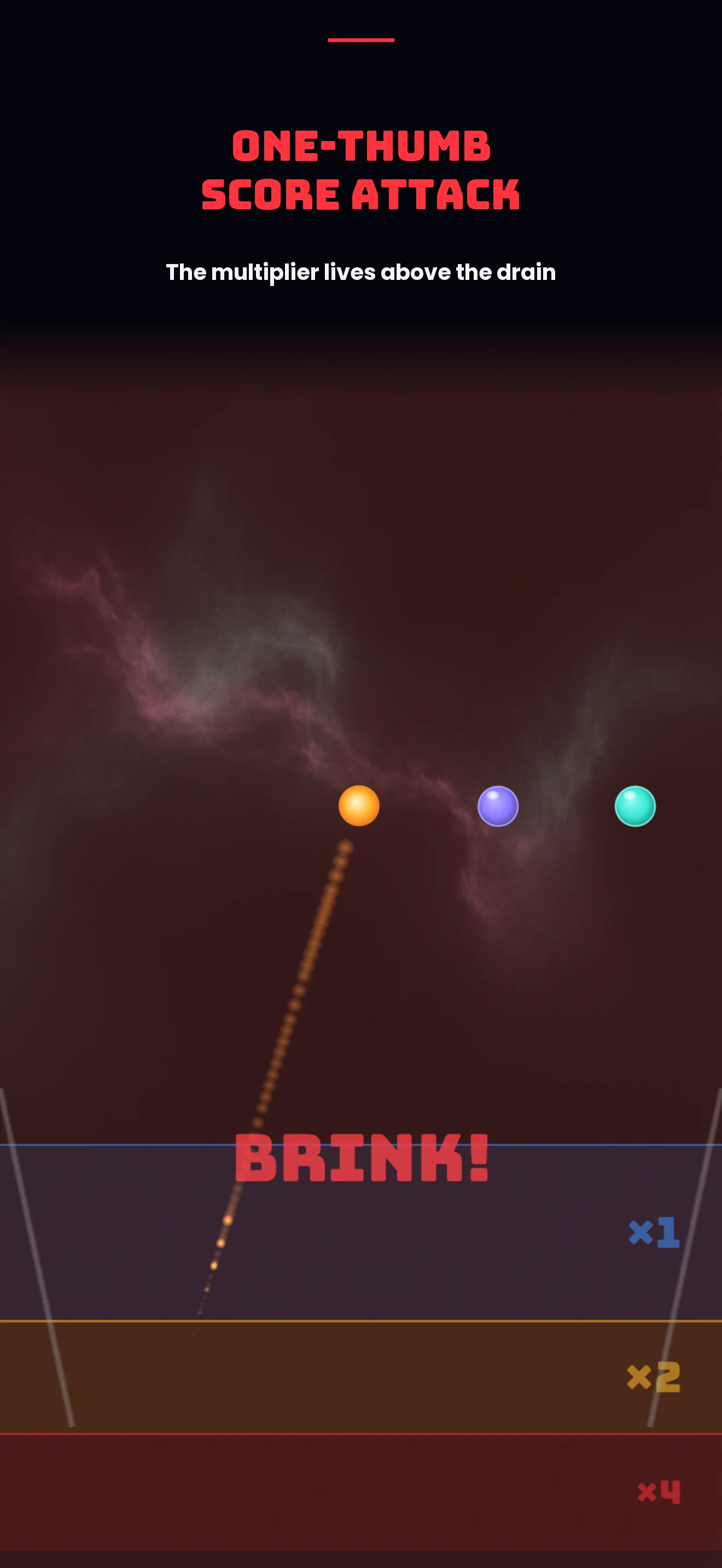
Brinkball is the better game and the messier benchmark result.
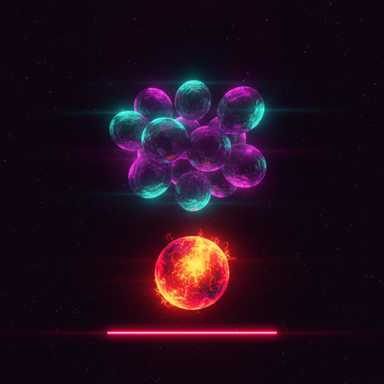
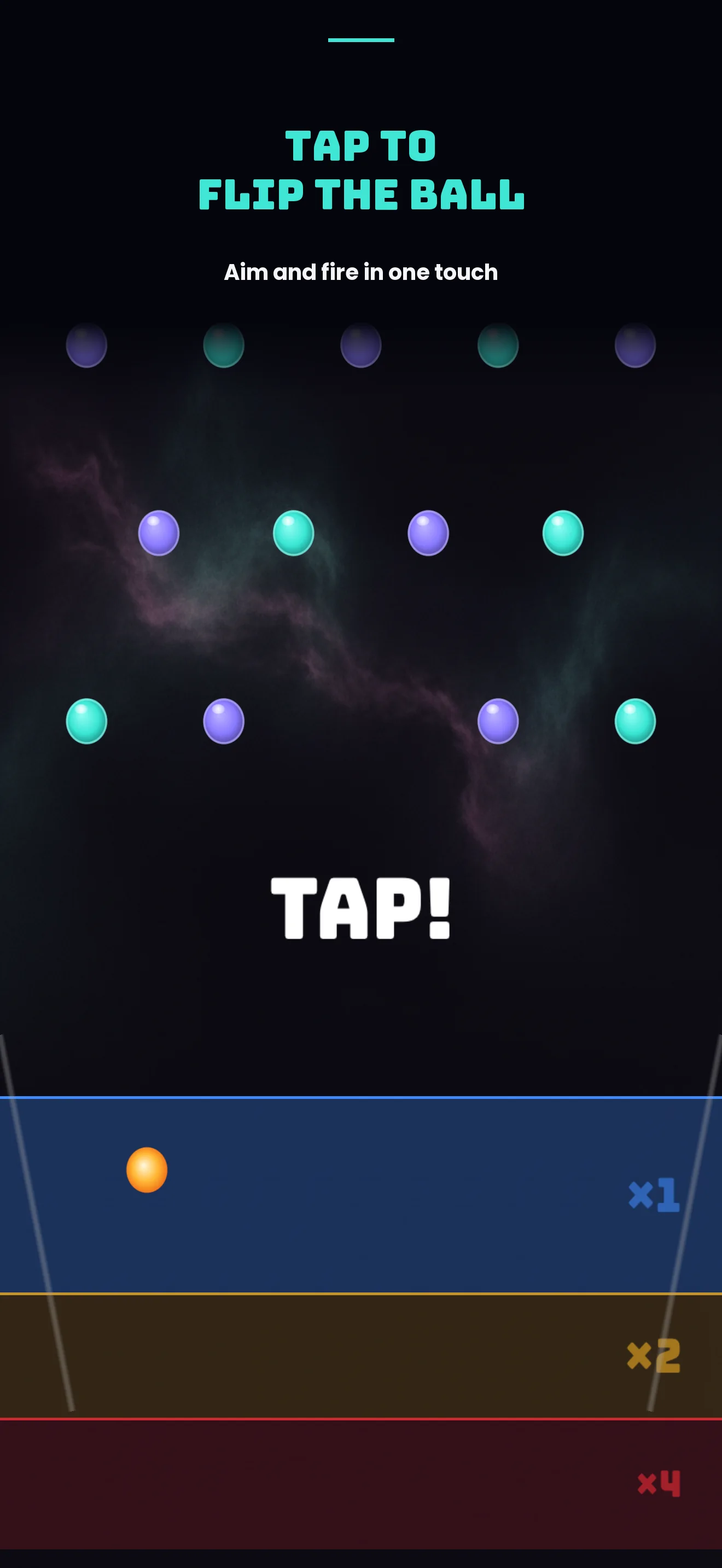
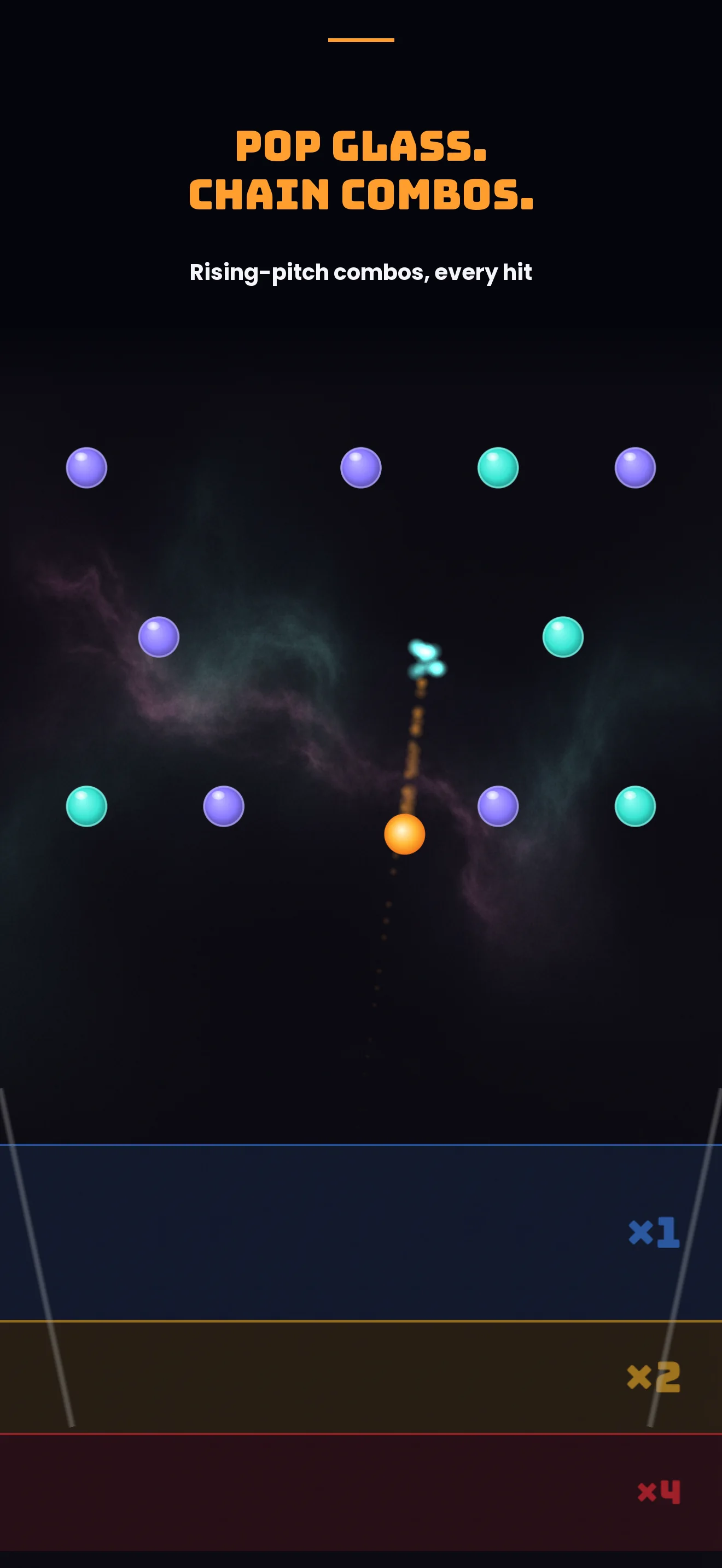
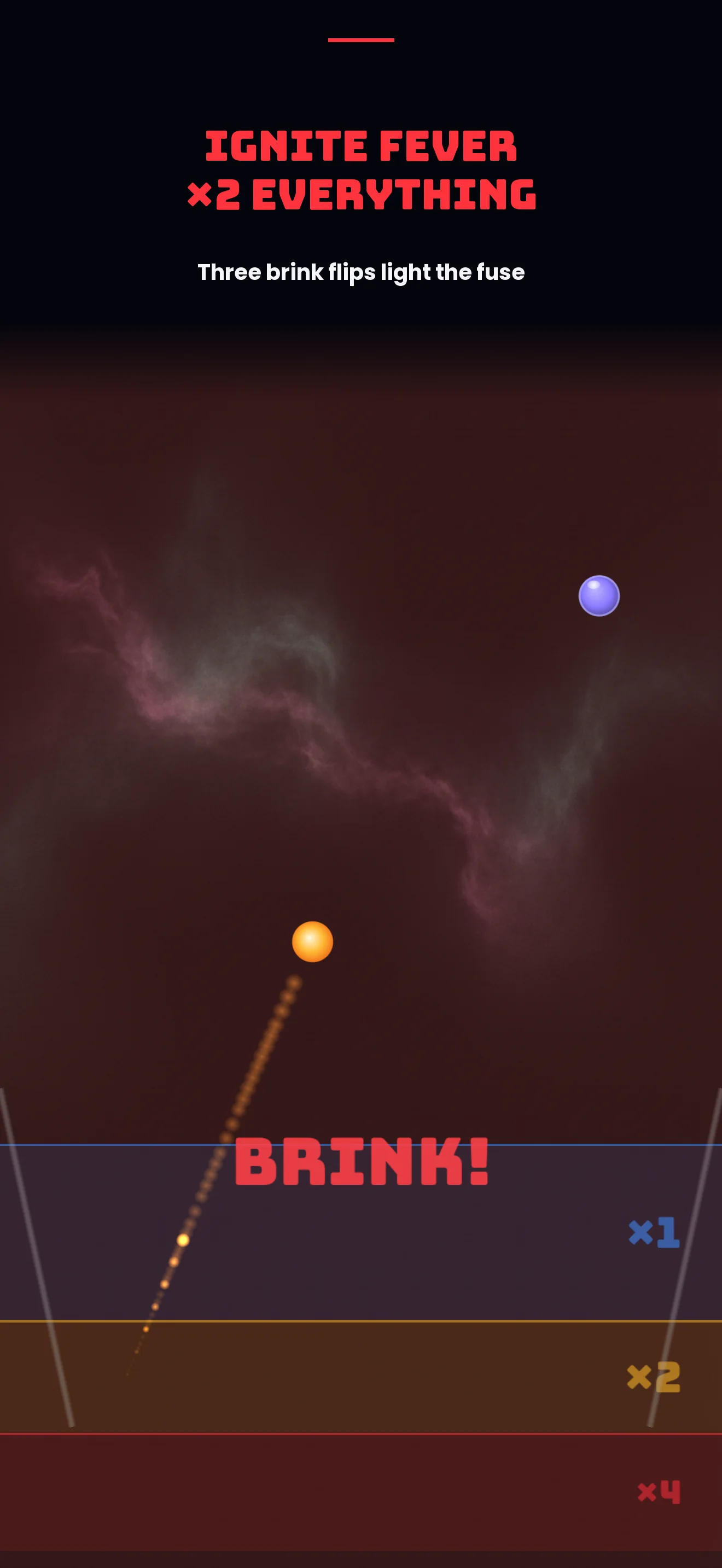
It is a one-thumb arcade game built around waiting too long. An ember ball falls towards the drain through three scoring bands. Tap early for a safe ×1 launch, wait for ×2, or risk the thin red ×4 strip at the bottom. Three successful brink shots trigger ten seconds of double-score Fever. Miss the strip three times and the run ends.
The best bug came from an accident
The model chose Brinkball after comparing three concepts. It wanted something louder than Ringbloom, and SpriteKit was a sensible fit for one falling ball, static pegs and an impulse rather than a full pinball simulation. SwiftUI handled the surrounding screens. Generated art and ElevenLabs audio were recorded in the asset log.
The build had 16 deterministic tests and an automated player for end-to-end checks. That automation found the most important problem by accident.
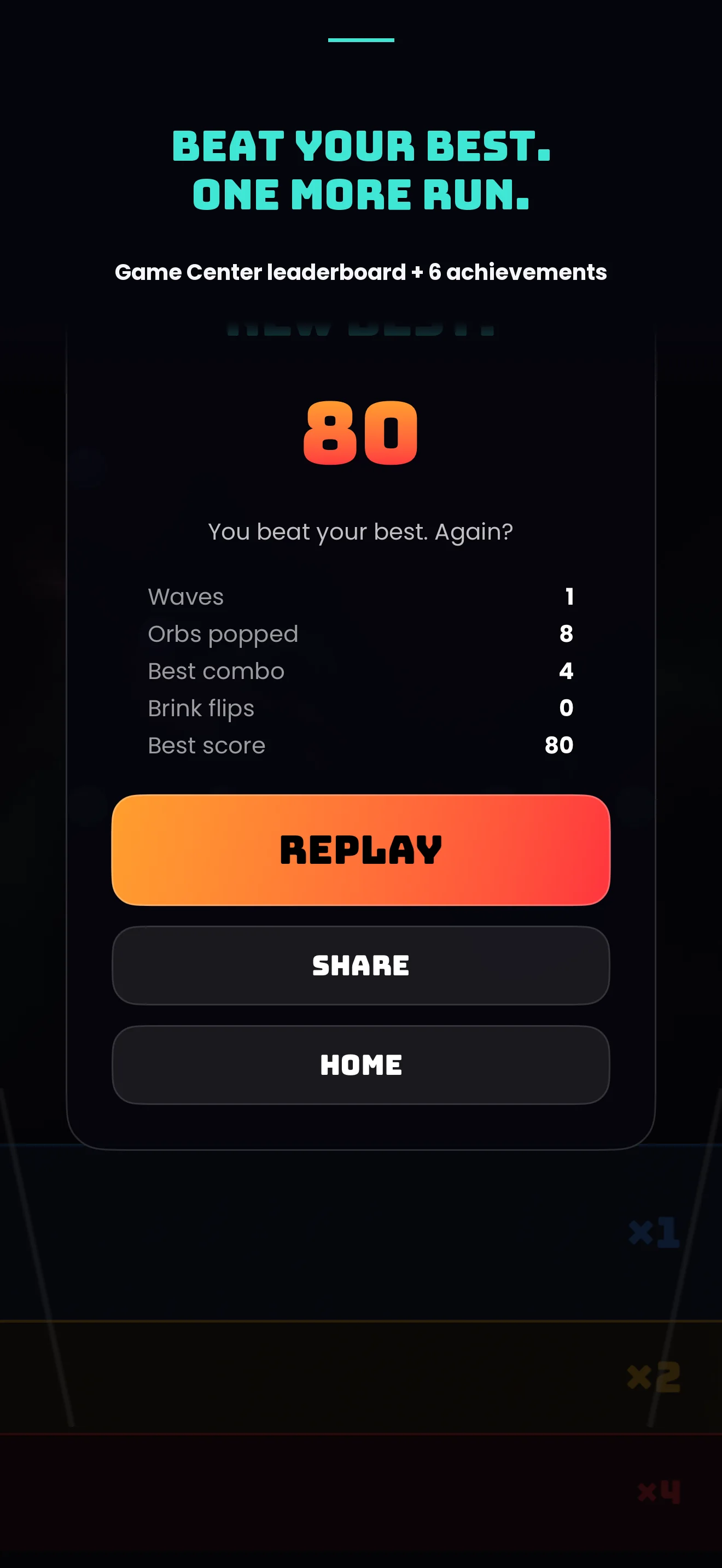
A verification session stopped while the automated player carried on. Roughly 20 hours later, the game had reached wave 1,272 with a score of 63.3 million. A capable player could never lose because the falling speed eventually stopped increasing. The fix kept narrowing the timing window so a strong run should end around wave 15–25.
The same review found a real audio crash after interruptions such as a phone call or AirPods switch. Round two then found a different class of failure. A new player’s first run lasted about 15 seconds and scored 40 because the game barely taught its central risk. The multiplier was hidden, Fever looked like normal play and the first wave was the emptiest part of the game.
The rebuild added a playable tutorial, a visible multiplier, a much clearer Fever mode, better wave celebrations and a denser first minute. Opus 4.8 called the first version a 6/10 and the rebuild an 8/10. Those are the model’s own scores, not independent ratings.
Three models make the result harder to compare
Fable 5 built round one. During round two, the harness triggered a safety fallback and switched to Opus 4.8. Opus did the critique and rebuild with no human intervention.
That matters. A fresh model reviewing somebody else’s work is not the same test as a model finding faults in its own decisions. The App Store description initially claimed it was the same model and had to be corrected once the switch was noticed.
Sonnet 5 later handled the repository work and this report. It pushed a Firebase configuration file to a new public repository. GitHub’s secret scanner caught the exposed API key, Tom relayed the alert, and the repository had to be cleaned up. Tom then deleted the leaking repository because the model’s GitHub token lacked that permission.
The benchmark session looked continuous, but the model identity changed twice. Any future run needs to record those switches as first-class protocol data.
The human work was mostly account access
Round one needed two nudges. The first changed the harness permission mode so the model could create the public support repository. The second restored an authenticated App Store browser session for territory and privacy settings. Tom supplied access, not product decisions.
Round one therefore scored 90/100. Round two scored 100/100 with no interventions, although the model change makes that result less comparable. Round three also scored 100/100. Build time and cost remain blank because the run did not record them cleanly.
Apple approved Brinkball on its first recorded submission. It is live for £1.99 in the UK and US $1.99, with no adverts, in-app purchases, subscription or tracking.
The original run also missed its PLAYTEST_LOG.md, so Tom later supplied the human verdict. He enjoyed Brinkball. His girlfriend, who likes very different games, said she liked it but it was not really for her. That is a qualified pass rather than evidence of broad appeal.
What the run actually proved
The models researched a viable idea, built and tested a real iOS game, found a crash, found a broken difficulty curve and improved the first minute. They also misstated which model did the work and briefly exposed a live API key.
Brinkball is worth keeping as a completed game. As benchmark evidence, the 100/100 improvement score needs an asterisk because a different model performed round two. Future reports should be independently edited, and future runs should treat model identity as part of the evidence rather than session metadata.
Full run notes and evidence
Scores
| Round | Result | Human intervention |
|---|---|---|
| Build | 90/100 | 2 nudges, 0 fixes, 0 rescues |
| Improve | 100/100 | None, but the harness changed model |
| Report | 100/100 | None |
These are autonomy scores. Opus 4.8’s 6/10 and 8/10 quality estimates were self-assessments and are not used as independent ratings.
Build and test evidence
- The logic layer finished with 16 deterministic tests.
- Automated play covered serving, flipping, scoring, Fever, wave completion, draining, game over and replay.
- Adversarial review reduced 18 raw findings to 11 confirmed defects across two rounds.
- The interrupted automated run reached wave 1,272 and 63.3 million points after roughly 20 hours, proving the difficulty curve could become endless.
- The revised speed curve aimed to end strong runs around waves 15–25.
- Audio interruption handling was added after testing found a deterministic crash following calls, Siri or audio-device changes.
Model and intervention record
- Claude Fable 5 built round one.
- Claude Opus 4.8 handled the critique and rebuild after an automatic safety fallback.
- Claude Sonnet 5 later handled repository remediation and the report.
- Tom changed the harness permission mode so the model could create the support repository.
- Tom restored the authenticated App Store browser session used for territory and privacy settings.
- The model completed the remaining settings across 175 territories.
- After Sonnet 5 exposed a Firebase configuration file, GitHub’s scanner raised the alert and Tom relayed it. Tom later deleted the leaking repository because the model lacked the required GitHub permission. This happened outside the formal round scores.
Shipping and evidence limits
- Apple approved Brinkball on its first recorded submission.
- The game is live for £1.99 in the UK and US $1.99.
- The original timestamps span roughly 14.5 hours, but about 13 hours were spent waiting for the App Store record. That is why no build-time claim is published.
- Token spend and generation-credit cost were not recorded.
- The two-person playtest verdict was supplied retrospectively because the run omitted
PLAYTEST_LOG.md. - The round-two score is not a clean same-model comparison.