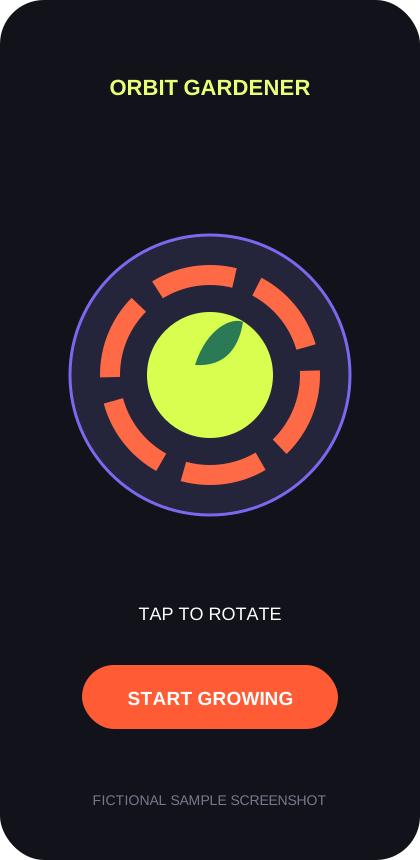
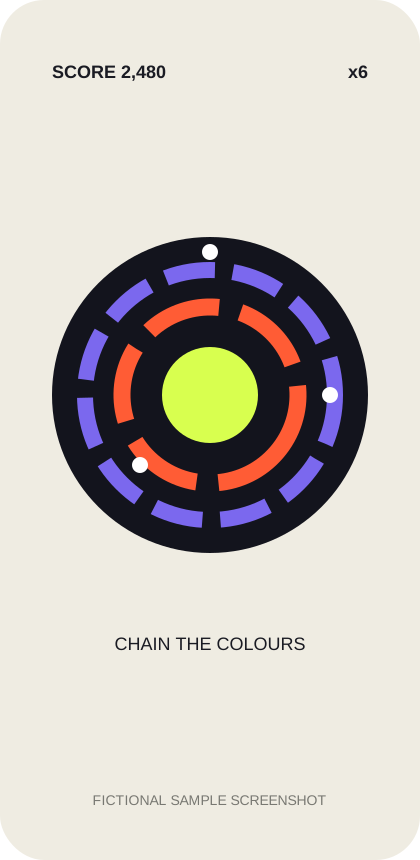
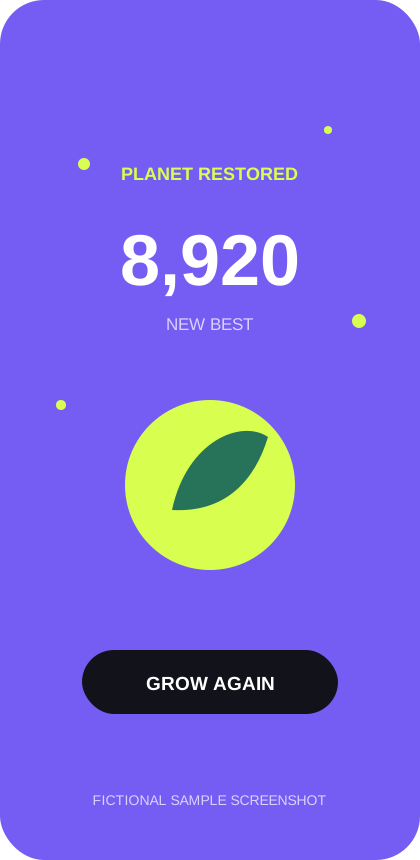
Sample data: Orbit Gardener, its model, its scores, and the events below are fictional. This article exists only to show how a completed benchmark report will read.
The idea
Orbit Gardener is a compact score-chasing puzzle game. You rotate rings of drifting seeds, line up matching colours, and trigger chain reactions that bring a tiny planet back to life. The model chose a narrow one-thumb loop that could be learned in seconds, then built depth through timing, risk, and escalating board patterns.
Why this engine
The model picked native Swift with SpriteKit. Its decision log cited the small binary, direct access to iOS haptics and audio, and the low-risk build-to-store path. Godot was considered, but the run judged that a custom engine export added complexity the game did not need.
What it built
- A complete play, score, lose, and replay loop
- Twelve hand-authored challenge patterns plus endless mode
- Procedural particles, haptics, four generated sound effects, and a generated icon
- Settings, accessibility labels, reduced-motion support, and local high scores
- App Store metadata, automated screenshots, privacy answers, pricing, and a processed build
The intervention log
The sample run needed one human nudge during store configuration: the model had selected an unavailable pricing point and was told to inspect the current territory price schedule. It then found the correct command, changed the setting itself, and continued. There were no human-written fixes or rescued steps.
Apple’s account-holder actions—creating the empty app record and the final review submission—are shown separately and do not count against the score.
Honest assessment
The model produced a coherent, playable game with a clean first-session experience. The small content pool would become repetitive for long sessions, and the generated audio needed more variation, but the result was complete enough to stand on its own as a paid microgame.
How this was built
Orbit Gardener was researched, designed, coded, tested, and prepared for the App Store by an example AI model in one continuous run. A human handled Apple’s required account steps and supplied one logged pricing nudge; the rest of the product loop was autonomous.