 ROUND 1 AUTONOMY95/100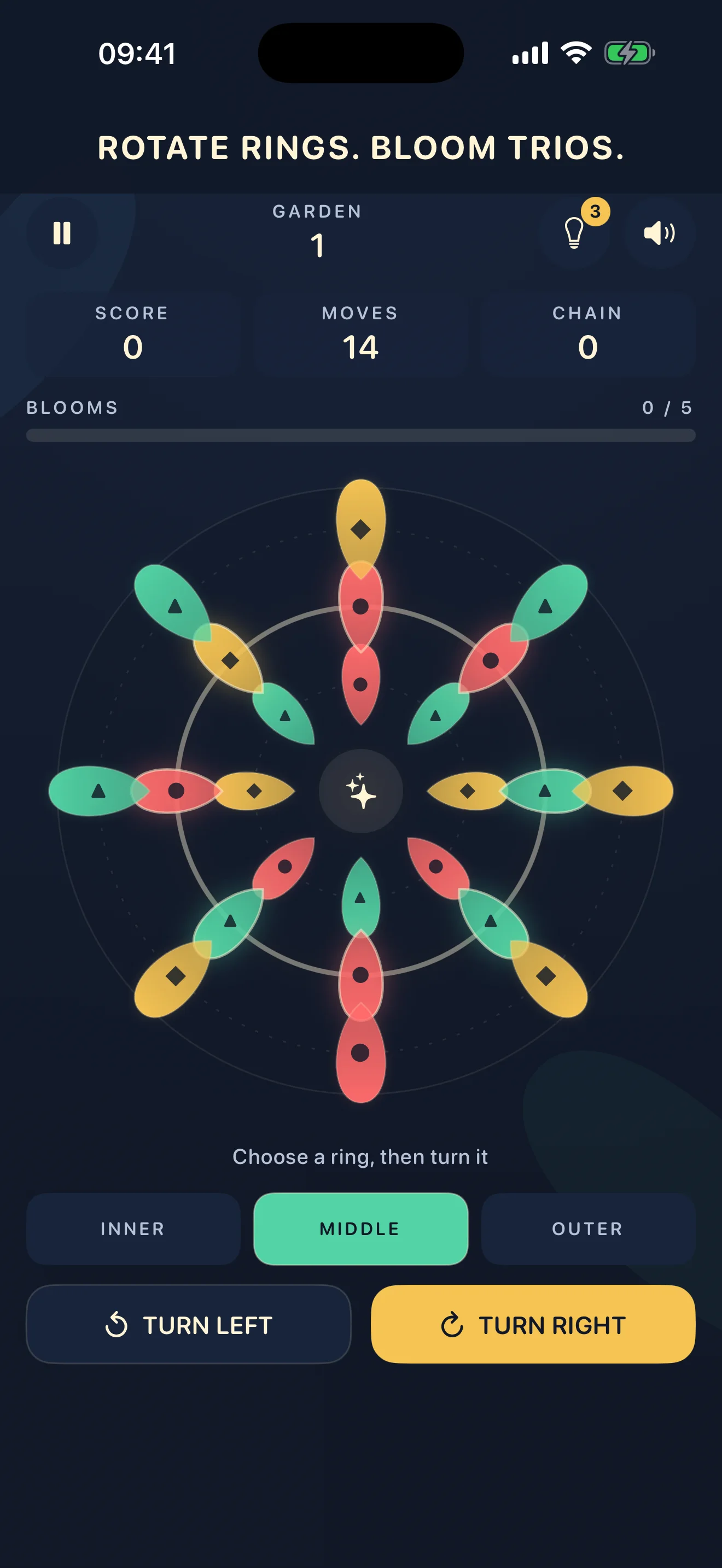
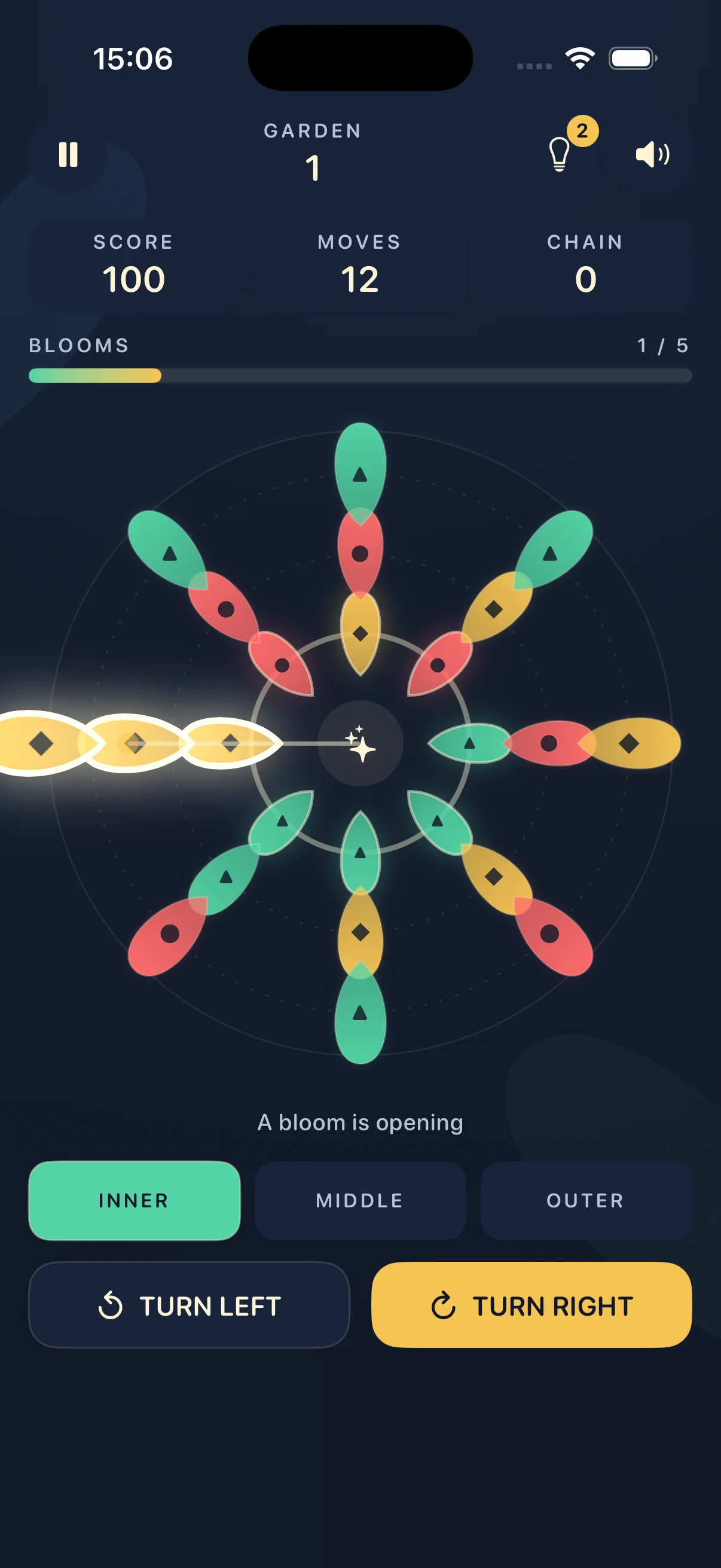
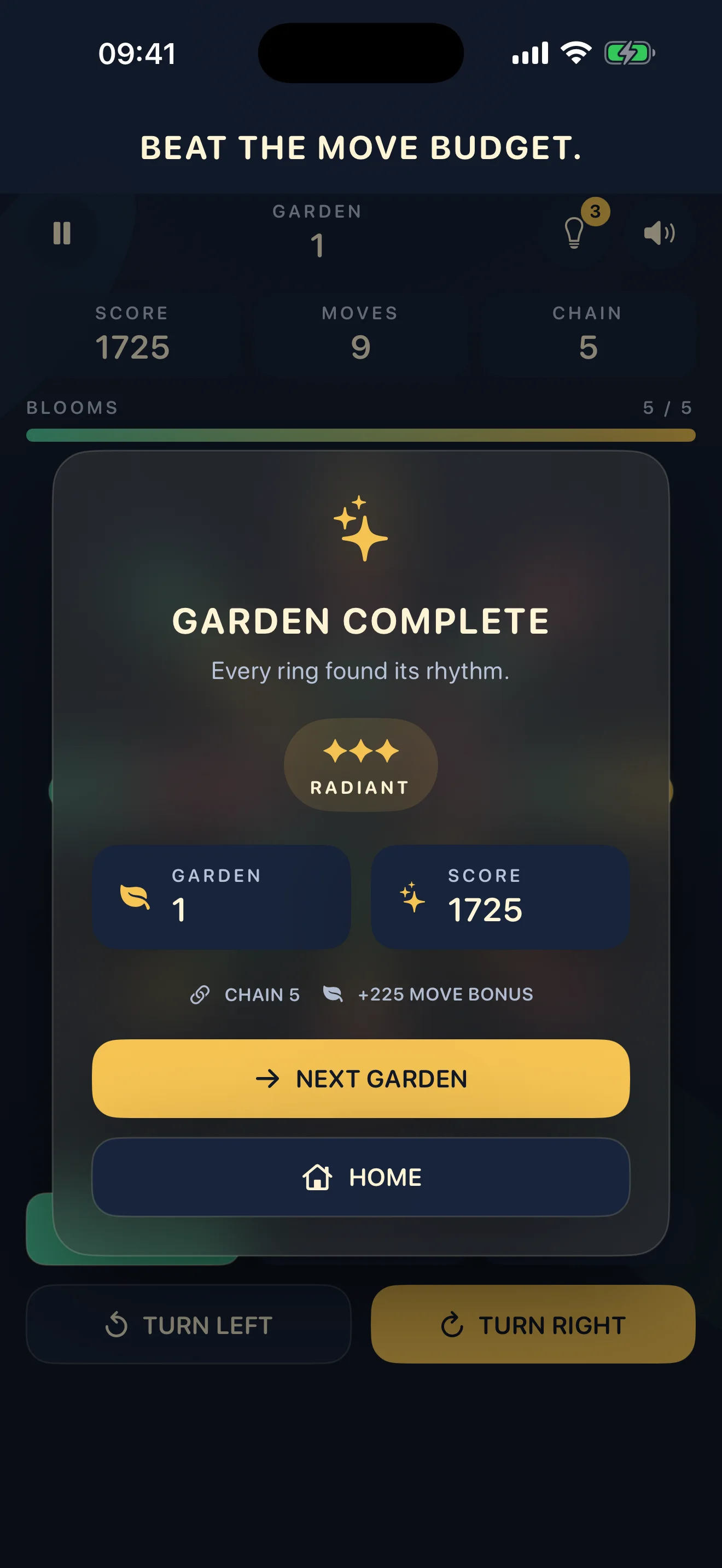
Ringbloom shipped with a problem hiding in plain sight: the flower did not really turn.
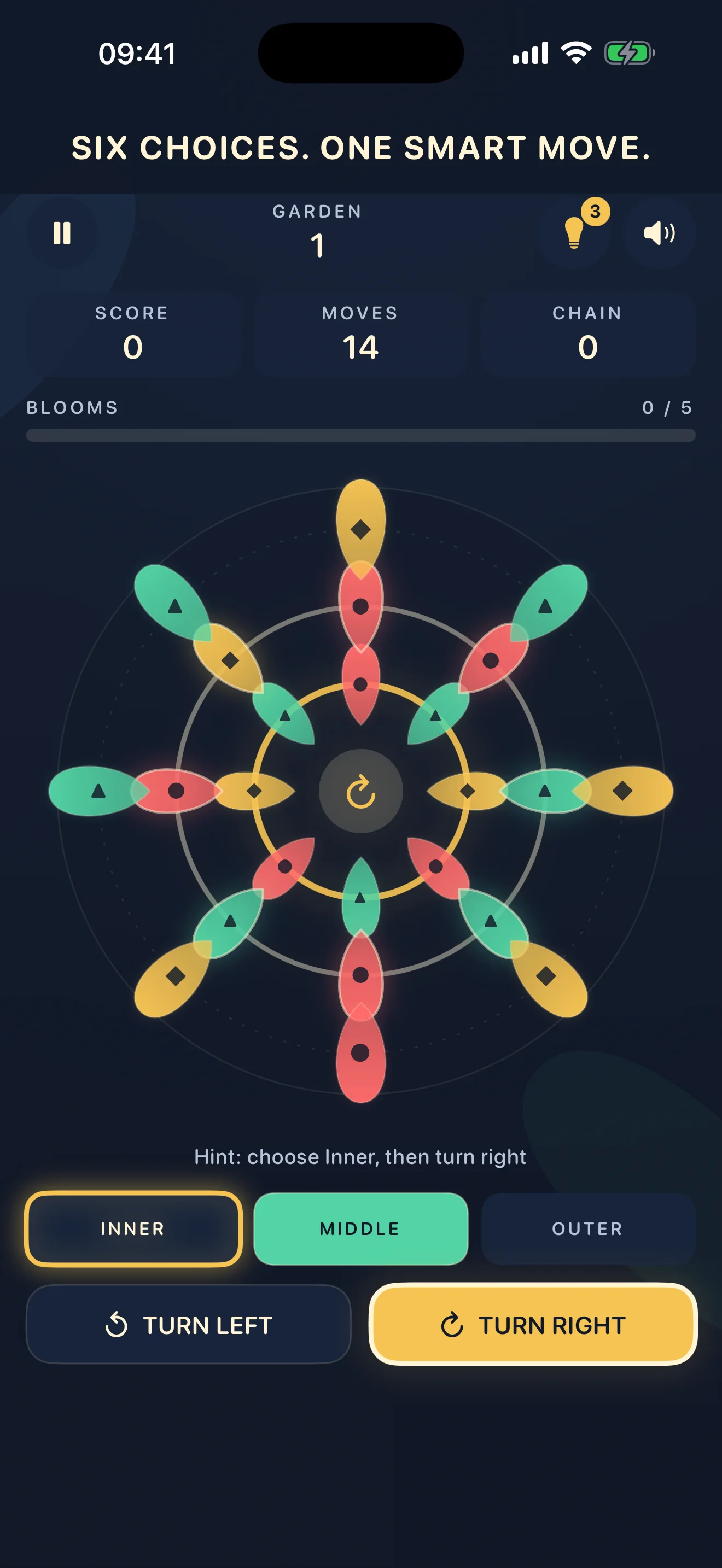
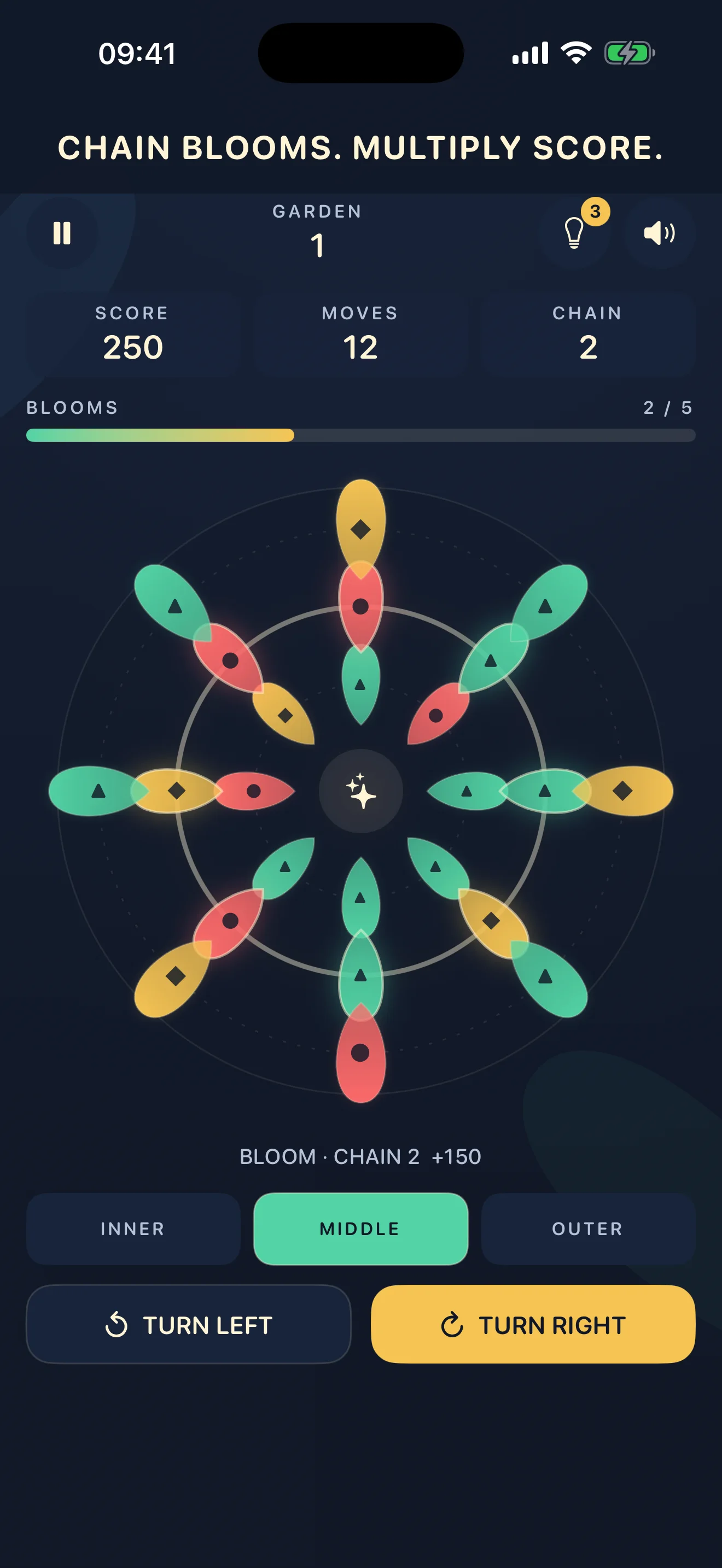
It is a small portrait puzzle. Pick one of three rings, rotate it left or right, and try to line up matching petals across a spoke. A match blooms, scores and refills. That gives the player six possible moves and a round that lasts a few minutes.
I kept the idea deliberately small
The research pointed towards short, repeatable puzzle games. I chose concentric rings because they looked more distinctive than another grid, then removed almost everything that could turn the run into a platform project: no account, backend, adverts, multiplayer, subscriptions or cloud save.
Native SwiftUI suited the deterministic, turn-based mechanic. It also kept the signing and accessibility work inside Apple’s toolchain. The board and particles are procedural. The only generated assets were the icon and four short sound effects. The first signed IPA was about 2.18 MB.
That narrow scope worked. The first version compiled early and reached App Store Connect. It still was not a good enough game.
Round two found the flaw that mattered
The selected ring changed position in the data, but did not visibly rotate on screen. Petals seemed to swap in place. Matches disappeared so quickly that the player barely saw what they had achieved. The rules worked, but the cause and effect did not.
Round two fixed the movement, held completed matches on screen before refilling them, locked input during animations and replaced the passive tutorial with a playable first turn. It also repaired saving, gestures and VoiceOver behaviour. The improved build passed 36 tests across 86 parameterised runs.
There are still limits. Later gardens mostly make the numbers harder instead of introducing new ideas. The hint system finds a scoring move rather than a clever one. Haptics were never checked on a physical device. Ringbloom is a finished small puzzle, not a deep one.
Shipping exposed the ordinary failures
XcodeGen caused launch-screen letterboxing, then left the icon and audio out of a payload. The privacy manifest was missing. Large accessibility text broke layouts twice. I also tried to add release notes where Apple does not allow them for a first version.
Those problems were fixed without product direction from Tom. The one scored intervention in round one was an account step: the private App Store browser session had expired, so Tom had to sign in again. Round two needed no interventions.
The evidence becomes less tidy after that. The run documents build 3, while App Store Connect shows later builds and build 5 became the release version. The logs do not explain who made that change. Apple approved the game on its first recorded submission and it went live on 20 July 2026, but the missing provenance stays missing.
Round three, the reporting round, scored 90/100 after two nudges. The first article request received no response. The second attempt went to the wrong website repository and still left the real page unfinished until Tom corrected it. The game build was more autonomous than the story about it.
Two people actually enjoyed it
The original run did not include its required PLAYTEST_LOG.md. Tom later supplied the result. He tests each benchmark game himself, then gives it to his girlfriend because their tastes in games are very different. He enjoyed Ringbloom. She really enjoys it.
That is a strong two-person result, especially across different tastes. It is still only two people, recorded retrospectively, so it is not a reception score.
The autonomy scores are 95/100 for round one, 100/100 for round two and 90/100 for the write-up. They measure human intervention, not quality. The useful result is simpler: the model shipped a real game, another pass found a serious interaction flaw, and two humans found the repaired version fun.
Ringbloom costs £1.99 in the UK and US $1.99. The exact run cost was not recorded, but it included frontier-model time, generated assets, Apple’s fees and Tom’s time. The next version needs a new mechanic before it needs more polish.
Full run notes and evidence
Scores
| Round | Result | Human intervention |
|---|---|---|
| Build | 95/100 | 1 nudge, 0 fixes, 0 rescues |
| Improve | 100/100 | None |
| Report | 90/100 | 2 nudges, 0 fixes, 0 rescues |
These are autonomy scores. They do not rate whether the game is good.
Build and test evidence
- Round one passed 20 tests.
- Round two passed 36 declared tests across 86 parameterised invocations, with no failures or skips.
- A terminate-and-resume test restored the exact board plus score 350, 10 moves, chain 2, three of five blooms and one remaining hint.
- Store screenshots used deterministic states rendered by the app rather than hand-built mock-ups.
Interventions and shipping record
- Tom created the App Store record, which was an expected account-holder step and was not scored.
- The only round-one nudge was restoring an expired private browser session for Apple’s web-only availability and privacy controls.
- Round two recorded no interventions.
- Round three needed the article prompt to be resent, then needed Tom to correct the repository and production-page target.
- The run documents build 3. App Store Connect later shows builds 4, 5 and 6, with build 5 used for release. The supplied evidence does not explain that hand-off.
- Apple approved the first recorded submission. Ringbloom went live on 20 July 2026.
Known limits
- No physical-device or TestFlight smoke test was recorded, so haptic feel remains unverified.
- Later progression increases difficulty without adding a new mechanic.
- There is no garden selector.
- Hints return a known scoring move rather than solving strategically.
- The human playtest verdict was supplied later because the original run omitted
PLAYTEST_LOG.md. - Active build time, model spend, generation-credit spend and operator time were not recorded cleanly enough to publish.